
Mutaciones causantes de la enfermedad de cataratas en las proteínas α-cristalina D y β-cristalina B1 Mutations causing cataract disease in α-crystallin D and β-crystallin B1 proteins
Barra lateral del artículo
Contenido principal del artículo
Resumen
Resumen
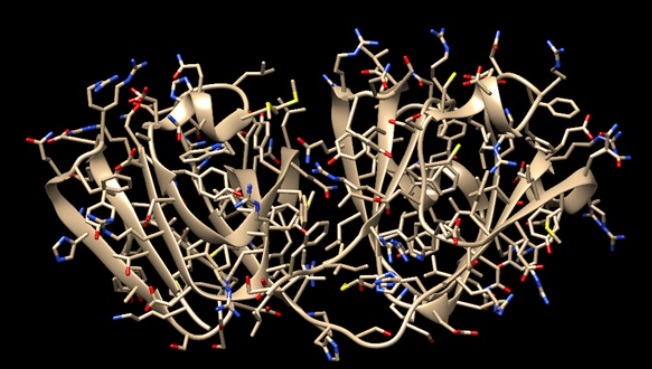
Las mutaciones en las proteínas α-cristalina D y ß-cristalina B1, participan en el proceso de la opacidad del cristalino, ello, se denomina cataratas. Esta enfermedad oftalmológica se caracteriza por la opacidad del cristalino, un lente en el ojo responsable de enfocar la luz hacia la retina. La catarata, es la principal causa de ceguera en el mundo, afectando a más de 65 millones de personas. Las cataratas son resultado de procesos degenerativos, como el daño oxidativo, así como de factores genéticos que alteran la estabilidad de proteínas clave en el cristalino, especialmente las proteínas α-cristalina D y β-cristalina B1 resultantes de los genes CRYBB1 y CRYGD respectivamente. Estas proteínas cristalinas mantienen la transparencia del cristalino y evitan la agregación de otras proteínas. Cuando estas proteínas sufren mutaciones, se vuelven propensas a la agregación, lo que contribuye a la formación de cataratas. Durante este estudio se emplearon herramientas bioinformáticas, como PolyPhen-2 y ProtScale, para identificar y predecir el impacto de las mutaciones. Los resultados revelan que la mayoría de estas mutaciones son potencialmente dañinas, afectando la estructura, solubilidad, hidrofobicidad y estabilidad de las proteínas, las cuales pueden desarrollar diferentes tipos de cataratas, obteniendo algunas que pueden ser hereditarias y otras que pueden desarrollarse a causa del entorno en el que se desarrolla la persona. Los resultados, indican la importancia de entender las mutaciones específicas en las proteínas del cristalino, ofreciendo información de la estructura molecular de la proteína con y sin mutación, así como datos bioinformáticos obtenidos que pueden dilucidar de mejor manera la enfermedad y podrían guiar el desarrollo de estrategias terapéuticas futuras que prevengan la progresión de esta enfermedad.
Palabras clave: cataratas, mutaciones, proteína cristalina, genética, cristalino.
Detalles del artículo

Esta obra está bajo una licencia internacional Creative Commons Atribución-NoComercial-CompartirIgual 4.0.
De acuerdo con la licencia Creative Commons ATRIBUCIÓN-NOCOMERCIAL-COMPARTIRIGUAL 4.0 INTERNACIONAL, establece que:
Usted es libre de:
- Compartir : copiar y redistribuir el material en cualquier medio o formato.
- Adaptar : remezclar, transformar y construir a partir del material
- El licenciante no puede revocar estas libertades siempre y cuando usted cumpla con los términos de la licencia.
En los siguientes términos:
- Atribución — Debe dar el crédito adecuado , proporcionar un enlace a la licencia e indicar si se realizaron cambios . Puede hacerlo de cualquier manera razonable, pero no de ninguna manera que sugiera que el licenciante lo respalda a usted o a su uso.
- No comercial — No puede utilizar el material con fines comerciales .
- CompartirIgual : si remezclas, transformas o construyes a partir del material, debes distribuir tus contribuciones bajo la misma licencia que el original.
- Sin restricciones adicionales : no puede aplicar términos legales o medidas tecnológicas que restrinjan legalmente a otros de hacer cualquier cosa que permita la licencia.

Avisos:
No tiene que cumplir con la licencia para los elementos del material en el dominio público o donde su uso esté permitido por una excepción o limitación aplicable.
No se ofrecen garantías. Es posible que la licencia no le otorgue todos los permisos necesarios para el uso previsto. Por ejemplo, otros derechos, como la publicidad, la privacidad o los derechos morales, pueden limitar la forma en que utiliza el material.
Citas
• Acosta-Sampson, L., & King, J. (2010). Partially folded aggregation intermediates of human gammaD-, gammaC-, and gammaS-crystallin are recognized and bound by human alphaB-crystallin chaperone. Journal of molecular biology, 401(1), 134–152. https://doi.org/10.1016/j.jmb.2010.05.067
• Aguayo-Ortiz, R., González-Navejas, A., Palomino-Vizcaino, G., Rodriguez-Meza, O., Costas, M., Quintanar, L., & Dominguez, L. (2019). Thermodynamic Stability of Human γD-Crystallin Mutants Using Alchemical Free-Energy Calculations. The journal of physical chemistry. B, 123(27), 5671–5677. https://doi.org/10.1021/acs.jpcb.9b01818
• Andley, U. P., Bai, F., & Xi, J. H. (2008). A Knockin Mouse Model for the R120G Mutation in AlphaB-Crystallin. Investigative Ophthalmology & Visual Science, 49(13), 5023-5023.
• Berry, V., Georgiou, M., Fujinami, K., Quinlan, R.A., Moore, A.T., & Michaelides, M. (2020). Inherited cataracts: molecular genetics, clinical features, disease mechanisms and novel therapeutic approaches. British Journal of Ophthalmology, 104, 1331 – 1337
• Bloemendal, H., de Jong, W., Jaenicke, R., Lubsen, N. H., Slingsby, C., & Tardieu, A. (2004). Ageing and vision: structure, stability and function of lens crystallins. Progress in biophysics and molecular biology, 86(3), 407–485. https://doi.org/10.1016/j.pbiomolbio.2003.11.012 .
• Boyle, D. L., Takemoto, L., Brady, J. P., & Wawrousek, E. F. (2003). Morphological characterization of the AlphaA-and AlphaB-crystallin double knockout mouse lens. BMC ophthalmology, 3, 1-11.
• Borges-Rodríguez, Y., Mata-Salgado, F., Morales-Cueto, R., Millan-Pacheco, C., Muñoz-Garay, C., & Rivillas-Acevedo, L. (2025). Role of human γD-crystallin tryptophans in the ultraviolet radiation response. Spectrochimica Acta Part A: Molecular and Biomolecular Spectroscopy, 126197.
• Carver, J.A., Ecroyd, H., Truscott, R.J., Thorn, D.C., & Holt, C. (2018). Proteostasis and the Regulation of Intra- and Extracellular Protein Aggregation by ATP-Independent Molecular Chaperones: Lens α-Crystallins and Milk Caseins. Accounts of chemical research, 51 3, 745-752.
• Cekic, O., & Zlatkovic, G. (2017). Metabolic determinants of lens aging and cataract. Experimental Eye Research, 165, 67-77.
• Cheng, C. Y., Kamran Goudarzi, H., Chua, Jet al. (2015). Smoking, EPIGENETIC MODIFICATIONS, and cataract. Ophthalmic Epidemiology, 22(3), 196-202
• Chylack, L. T., Wolfe, J. K., Friend, Jet al. (1979). The sorbitol pathway and cataractogenesis. Ophthalmology, 86(9), 1365-1372.
• Chong, S., & Ham, S. (2014). Site‐directed analysis on protein hydrophobicity. Journal of Computational Chemistry, 35, 1364 - 1370.
• Fernández, M. M., & Afshari, N. A. (2020). New trends in the treatment of cataracts. Current Opinion in Ophthalmology, 31(1), 54-59.
• Ferrer Fernández, Yahelín, Martínez Sánchez, Gregorio, Leroy Wright, Damián, & Thndiwe Chellah, Nantembwa. (2009). Estrés oxidativo y su impacto en las cataratas. Revista Cubana de Farmacia , 43 (3) Recuperado el 3 de noviembre de 2024, de http://scielo.sld.cu/scielo.php?script=sci_arttext&pid=S0034-75152009000300011&lng=es&tlng=es
• Gao, X., Wang, W., & Bai, L. (2017). DNA methylation changes in lens epithelium cells in age-related cataracts. Investigative Ophthalmology & Visual Science, 58(2), 566-573.
• Hejtmancik, J. F., & Kantorow, M. (2004). Molecular genetics of age-related cataract. Experimental Eye Research, 79(1), 3-9
• Horwitz, J. (2003). Alpha-crystallin. Experimental Eye Research, 76(2), 145-153.
• Jack J Kanski Brad Bowling, “Oftalmología clínica Séptima edición,” Biblioteca CLEA, consulta 9 de octubre de 2024, https://clea.edu.mx/biblioteca/items/show/111.
• Javadiyan, S., Craig, J. E., Souzeau, E., Sharma, S., & Hewitt, A. W. (2019). The Role of Genomics in Cataract. Ophthalmic Genetics, 40(1), 1-13.
• Khanna, R. C., Raman, U., & Rao, G. N. (2020). Medical management and preventive strategies for cataract: Limitations and barriers. Community Eye Health, 33(109), 15.
• Klein, B. E., Klein, R., & Lee, K. E. (2011). Incidence of age-related cataract over a 10-year interval: The Beaver Dam Eye Study. Ophthalmology, 118(10), 2118-2124
• Kmoch, S., Brynda, J., Asfaw, B., Bezouska, K., Novák, P., Rezácová, P., Ondrová, L., Filipec, M., Sedlácek, J., & Elleder, M. (2000). Link between a novel human gammaD-crystallin allele and a unique cataract phenotype explained by protein crystallography. Human molecular genetics, 9(12), 1779–1786. https://doi.org/10.1093/hmg/9.12.1779
• Lampi, K. J., Ma, Z., Shih, M., Shearer, T. R., Smith, J. B., Smith, D. L., & David, L. L. (1997). Sequence analysis of betaA3, betaB3, and betaA4 crystallins completes the identification of the major proteins in young human lens. The Journal of biological chemistry, 272(4), 2268–2275. https://doi.org/10.1074/jbc.272.4.2268
• Li, J., Leng, Y., Han, S., Yan, L., Lu, C., Luo, Y., Zhang, X., & Cao, L. (2018). Clinical and genetic characteristics of Chinese patients with familial or sporadic pediatric cataract. Orphanet journal of rare diseases, 13(1), 94. https://doi.org/10.1186/s13023-018-0828-0
• Lobato, S., Salomón-Soto, V. M., Espinosa-Méndez, C. M., Herrera-Moreno, M. N., García-Solano, B., Pérez-González, E., ... & Álvarez-Valenzuela, R. (2024). Molecular Pathways Linking High-Fat Diet and PM2. 5 Exposure to Metabolically Abnormal Obesity: A Systematic Review and Meta-Analysis. Biomolecules, 14(12), 1607.
• Ma, A. S., Grigg, J. R., Ho, G., Prokudin, I., Farnsworth, E., Holman, K., Cheng, A., Billson, F. A., Martin, F., Fraser, C., Mowat, D., Smith, J., Christodoulou, J., Flaherty, M., Bennetts, B., & Jamieson, R. V. (2016). Sporadic and Familial Congenital Cataracts: Mutational Spectrum and New Diagnoses Using Next-Generation Sequencing. Human mutation, 37(4), 371–384. https://doi.org/10.1002/humu.22948
• Mancilla-Simbro, C., Ramírez-Almaraz, S. P., Ramírez-Mata, A., Cepeda-Cornejo, V., Pérez-Vigueras, M. R., López-Aguilar, D. L. E., ... & de León, J. F. V. D. (2024) La Bioinformática como una herramienta para la investigación científica en la cultura física. Laboratorio, 2119, 2254.
• Marchese-Rojas, M., Islas, Á. A., Mancilla-Simbro, C., Millan-PerezPeña, L., León, J. S., & Salinas-Stefanon, E. M. (2023). Inhibition of the Human Neuronal Sodium Channel Nav1. 9 by Arachidonyl-2-Chloroethylamide, An Analogue of Anandamide in a hNav1. 9/rNav1. 4 Chimera, An Experimental and in Silico Study. Neuroscience, 511, 39-52.
• Mrugacz, M., Pony-Uram, M., Bryl, A., & Zorena, K. (2023). Current Approach to the Pathogenesis of Diabetic Cataracts. International Journal of Molecular Sciences, 24.
• Nandrot, E., Slingsby, C., Basak, A., Cherif-Chefchaouni, M., Benazzouz, B., Hajaji, Y., Boutayeb, S., Gribouval, O., Arbogast, L., Berraho, A., Abitbol, M., & Hilal, L. (2003). Gamma-D crystallin gene (CRYGD) mutation causes autosomal dominant congenital cerulean cataracts. Journal of medical genetics, 40(4), 262–267. https://doi.org/10.1136/jmg.40.4.262
• Oliveira, J. B. de, & Golçalves, S. J. da C. (2024). TRANSTORNOS DO CRISTALINO NO ESTADO DO RIO DE JANEIRO: ANÁLISE EPIDEMIOLÓGICA ENTRE 2018 E 2021. Revista Ibero-Americana De Humanidades, Ciências E Educação, 10(3), 2408–2419. https://doi.org/10.51891/rease.v10i3.13402
• Cuatlayotl-Olarte, R., Xiqui-Vázquez, M. L., Reyes-Carmona, S. R., Mancilla-Simbro, C., Baca, B. E., & Ramírez-Mata, A. (2023). Aldehyde dehydrogenase diversity in Azospirillum genomes. Diversity, 15(12), 1178.
• Pande, A., Annunziata, O., Asherie, N., Ogun, O., Benedek, G. B., & Pande, J. (2005). Decrease in protein solubility and cataract formation caused by the Pro23 to Thr mutation in human gamma D-crystallin. Biochemistry, 44(7), 2491–2500. https://doi.org/10.1021/bi0479611
• Pande, A., Pande, J., Asherie, N., Lomakin, A., Ogun, O., King, J. A., Lubsen, N. H., Walton, D., & Benedek, G. B. (2000). Molecular basis of a progressive juvenile-onset hereditary cataract. Proceedings of the National Academy of Sciences of the United States of America, 97(5), 1993–1998. https://doi.org/10.1073/pnas.040554397
• Pande, A., Pande, J., Asherie, N., Lomakin, A., Ogun, O., King, J., & Benedek, G. B. (2001). Crystal cataracts: human genetic cataract caused by protein crystallization. Proceedings of the National Academy of Sciences of the United States of America, 98(11), 6116–6120. https://doi.org/10.1073/pnas.101124798
• Panzo, N., Memon, H., Ong, J., Suh, A., Sampige, R., Lee, R., ... & Lee, A. G. (2025). Molecular and Biomechanical Changes of the Cornea and Lens in Spaceflight. Life Sciences in Space Research.
• Plotnikova, O. V., Kondrashov, F. A., Vlasov, P. K., Grigorenko, A. P., Ginter, E. K., & Rogaev, E. I. (2007). Conversion and compensatory evolution of the gamma-crystallin genes and identification of a cataractogenic mutation that reverses the sequence of the human CRYGD gene to an ancestral state. American journal of human genetics, 81(1), 32–43. https://doi.org/10.1086/518616
• Shiels, A., & Hejtmancik, J. F. (2007). Genetic origins of cataract. Archives of Ophthalmology, 125(2), 165-173
• Shukla, M., & Ahad, M.A. (2024). Balancing act: navigating the intricacies of proteostasis. International Journal of Research in Medical Sciences.
• Spector, A., & Garner, W. H. (1981). Hydrogen peroxide and human cataract. Experimental Eye Research, 33(6), 673-681.
• Stephan, D. A., Gillanders, E., Vanderveen, D., Freas-Lutz, D., Wistow, G., Baxevanis, A. D., Robbins, C. M., VanAuken, A., Quesenberry, M. I., Bailey-Wilson, J., Juo, S. H., Trent, J. M., Smith, L., & Brownstein, M. J. (1999). Progressive juvenile-onset punctate cataracts caused by mutation of the gammaD-crystallin gene. Proceedings of the National Academy of Sciences of the United States of America, 96(3), 1008–1012. https://doi.org/10.1073/pnas.96.3.1008
• Simbro, C. M., Bautista, C. F. C., Mata, A. R., Aguilar, L. E. L., Cano, S. A. R., Hernández, L. M. S., & Aragón, L. G. H. (2024) Creación de encuestas para el diseño de un jardín sensorial: un enfoque etnobotánico y bioinformático en la Benemérita Universidad Autónoma de Puebla.
• Sun, Z., Zhou, Q., Li, H., Yang, L., Wu, S., & Sui, R. (2017). Mutations in crystallin genes result in congenital cataract associated with other ocular abnormalities. Molecular vision, 23, 977–986.
• Takemoto, L., & Sorensen, C. M. (2008). Protein–protein interactions and lens transparency. Experimental eye research, 87(6), 496-501.
• Truscott, R. J. (2005). Age-related nuclear cataract—oxidation is the key. Experimental Eye Research, 80(5), 709-725.
• Truscott, R. J. (2005). Prevention of age-related cataract by medical treatment. Ophthalmology Clinics of North America, 18(3), 365-371.
• Vogel, E. M., & Johnson, G. J. (2018). Challenges in translating cataract research findings into clinical practice. Translational Vision Science & Technology, 7(5), 1.
• Villa-Díaz, F., Ramírez-Almaraz, P. S., Ramírez-Mata, A., Olea-Amezcua, M. A., Villanueva-Castillo, A., & Mancilla-Simbro, C. (2025). The Scoping review: Bioinformatic analysis of the mecC gene in the Staphylococcus aureus strain. Revista Ciencia Veterinaria y Biotecnología, 2(1), 1-11.
• Vázquez, F. P. C., Amezcua, M. A. O., Mata, A. R., Carmona, S. R. R., Santiago, L. M., Cano, S. A. R., ... & Mancilla-Simbro, C. (2024) JARDÍN SENSORIAL INCLUSIÓN Y BIENESTAR PARA TODOS DE LA MANO DE LA BUAP.
• Wang, K. J., Wang, S., Cao, N. Q., Yan, Y. B., & Zhu, S. Q. (2011). A novel mutation in CRYBB1 associated with congenital cataract-microcornea syndrome: the p.Ser129Arg mutation destabilizes the βB1/βA3-crystallin heteromer but not the βB1-crystallin homomer. Human mutation, 32(3), E2050–E2060. https://doi.org/10.1002/humu.21436
• Zhuang, J., Cao, Z., Zhu, Y., Liu, L., Tong, Y., Chen, X., Wang, Y., Lu, C., Ma, X., & Yang, J. (2019). Mutation screening of crystallin genes in Chinese families with congenital cataracts. Molecular vision, 25, 427–437.